
Nail Drill for Manicure or Pedicure? How the Service Requirements Change Introduction
Compare service tasks, local scope, station layout, and product setup for manicure and cosmetic pedicure nail drills.
Choosing a manicure and pedicure nail drill for a salon does not automatically mean choosing two different machines. One professional e-file can be considered for both only when it fits the salon’s actual cosmetic tasks, is permitted for those tasks in the operating market, works at both stations, and is documented for the exact model and package.
This article uses nail drill to mean a professional electric nail file (e-file), not a craft drill or an electric foot file. Cosmetic pedicure means foot and toenail beauty services; medical, podiatry, and callus-treatment work are outside this comparison. Because manicure is planned around hands and a table, while cosmetic pedicure is planned around feet and a foot-service station, the same e-file format may need to work in two different physical settings.
Four Checks Before You Choose a Configuration
Use these four checks in order. Start with the services the salon intends to offer, then confirm the local scope, map each workstation, and compare the exact product package. This sequence keeps the decision grounded in the salon’s real requirements before attention shifts to model features.
Service
List the cosmetic nail tasks offered at both stations. This keeps the discussion tied to the actual menu instead of a generic product category. A useful service note names the station, the task, and the product information the salon team needs to confirm. For example, a salon may list nail preparation, shaping, or removal work as separate questions rather than place every task under one broad service name.
If the same cosmetic nail-preparation or removal task appears on both menus, compare the same model’s package, handpiece, and accessory information for both stations. If the tasks differ, record the product questions separately. This does not create a universal accessory list for manicure or pedicure; it gives the salon team a practical way to compare the information that matters.
Scope
Local rules can affect permitted e-file work, technician requirements, and station rules. U.S. requirements differ: Texas permits professional nail-industry electric files for manicure or pedicure services; Colorado links use to defined procedures and additional training; Delaware restricts electric files on natural nails. Check the current rules for the market where the salon operates before finalizing the service plan.
Station
Map where the unit, handpiece, and power arrangement will sit at both stations. This reveals whether a controller-based format or a compact cordless format is more practical—and whether one configuration can realistically cover both service areas.
Make the comparison concrete. At the manicure table, identify the place reserved beside the working area and the route to the available power connection. At the foot-service station, identify the space that remains clear around the client chair, basin, stand, or spa arrangement. If a shared configuration would have to be repeatedly moved, its handpiece holder, controller, charging arrangement, and accessory storage should all be part of the station review.
Setup
For each candidate model, confirm the model number, standard package, handpiece and accessory information, included or optional components, and target-market power, plug, or charging details. A category page can help shortlist formats; the final choice needs documentation for the exact model and package.
This is where many comparisons fail. An image or a category description may show a format, but it may not establish which accessories are in the package, which option is selected for the target market, or what needs to be ordered separately. Ask for the answer in writing, attach it to the quotation or model record, and use the same record for both service stations.
How to Compare Your Shortlist
Use the same checklist for every model on your shortlist. Include:
- the manicure and cosmetic pedicure tasks on the menu;
- the operating market or markets;
- a simple description or photo of each station layout;
- the preferred product format, if there is one; and
- the information you need confirmed: model, package, accessories, power or charging arrangement, and target-market option.
Then compare each model against the four checks. A complete product record connects the model to the stated tasks, identifies the exact package, and makes the station plan easy to assess. A broad “for manicure and pedicure” label without a confirmed model or package is not enough for a purchase decision.
This process separates two questions: whether an e-file format fits the station, and whether the exact configuration is ready to order. The first can be discussed early; the second needs documented details.
Keep the final comparison to one page. Put Service, Scope, Station, and Setup across the top, then use a short note under each heading for every candidate model. This makes an unresolved requirement visible before the salon team requests final configuration confirmation.
Two Jimdoa Formats and Their Station Advantages
Once the salon has defined its requirements, format differences become useful buying criteria.
JMD-219: A Controller-Based Format for Fixed Stations
JMD-219 professional salon nail drill is a controller-based setup with an LCD speed display and a push-pull chuck. Its standard package lists a main controller, handpiece, holder, base, adapter, and user manual; drill bits are separately confirmed.
For a fixed manicure table or foot-service station, its advantages are clear:
- The controller, base, and handpiece holder give the team defined components to place in the station layout.
- The LCD display makes the selected speed setting visible during a service.
- The push-pull chuck allows compatible bits to be changed without an additional tool.
This is a strong format to review when both stations have room for a controller-based setup and the salon wants a clearly documented package.
JMD-116: A Compact Cordless Format for Flexible Layouts
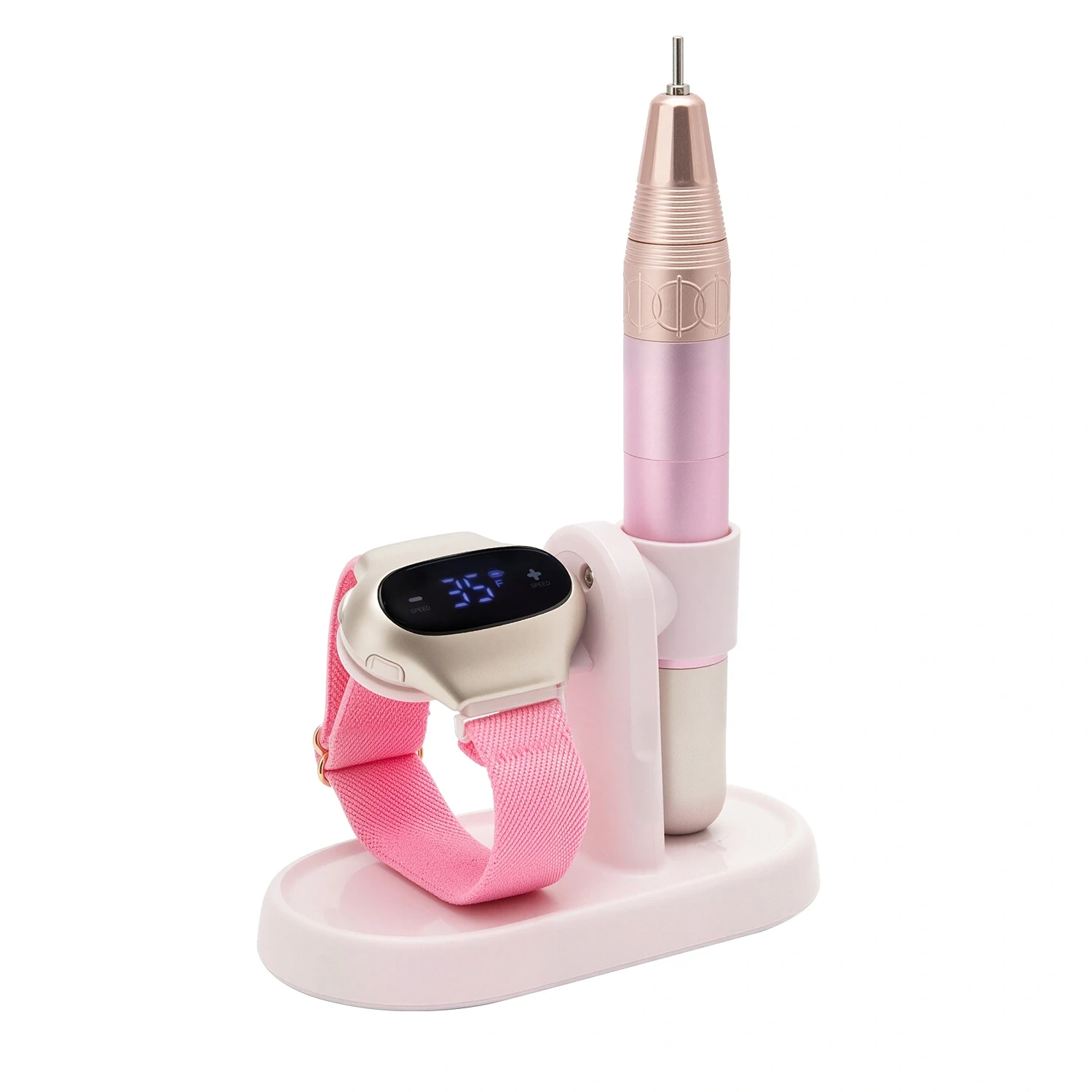
JMD-116 cordless electric nail drill uses a pen-style cordless design with USB Type-C charging.
View JMD-116 cordless electric nail drill
Its advantages are most relevant when station space is limited or the layout needs to stay compact:
- The wearable controller can reduce the need for a tabletop control unit, making the format worth comparing where the station layout benefits from a compact setup.
- USB Type-C charging gives the team a straightforward charging option to plan for in the station setup.
- The pen-style body makes this format a focused alternative to compare when the salon is prioritizing a smaller equipment footprint.
Before selection, confirm the exact package, charging or plug requirements, and accessories for the target market.
Conclusion: Choose the Configuration That Fits Both Services
Manicure and cosmetic pedicure do not need to be treated as two separate nail-drill categories. Start with the real cosmetic tasks, confirm the permitted scope in the operating market, map each workstation, and then compare the exact package offered for the shortlisted model.
Choose a shared setup when the same documented configuration works for both stations and both service menus. Choose separate setups when the service scope, station layout, or confirmed package differs. The four checks make that decision visible before the salon commits to a model.
Browse professional electric nail drills when your requirements are clear. Or contact Jimdoa about your nail drill requirements with your service menu, target market, and station plan to confirm the standard package, accessories, and plug or charging option for your shortlisted model.
FAQs
Can one professional e-file be used for both manicure and pedicure services?
Yes, if the service tasks, local scope, station plan, and exact configuration all align.
What should I send to a supplier?
Send the service menu, target market, station layout, and the product information you need confirmed.
What is outside this article?
This article is limited to cosmetic nail-care planning. Medical, podiatry, callus-treatment, and damaged-nail needs require a separate assessment.