
Nail Drill With Vacuum or Separate Dust Collector? What Buyers Should Confirm
Compare integrated nail drills with vacuum and separate dust collectors for your salon workstation.
An integrated nail drill with vacuum combines the drill and dust-collection function in one machine. A separate setup uses a nail drill and a dust collector as two independent pieces of equipment.
The choice affects more than desk placement. It changes the daily working rhythm, how consistent the salon stations feel, how freely the setup can change, how the team approaches care, and how the initial purchase is organized. The comparison below shows where each format tends to fit best.
What Is a Nail Drill With Vacuum?
A nail drill with vacuum is a single, integrated machine. The drill, controls, and dust-collection function belong to one defined system, so the technician begins with one main machine rather than selecting a drill and adding a separate collector.
The machine can still include a handpiece, controls, a collection area, and accessories. It is integrated because those parts are supplied and used as one machine—not because every part has to look like one solid block.
With a separate setup, the drill and collector remain independent. The salon can choose, place, and care for them separately. That is the essential difference: one complete system or two products that can be matched around the way a station is used.
Integrated vs. Separate in Daily Salon Use
| What changes in daily use | Integrated nail drill with vacuum | Separate nail drill and dust collector | What it means for your salon |
|---|---|---|---|
| Working rhythm | The technician starts with one main system for drilling and dust collection. | The technician works with two products that need to be arranged as part of the station. | A settled, repeatable station often suits an integrated format; a more changeable setup may suit separate equipment. |
| Station consistency | One complete machine can make similar manicure desks easier to standardize visually and operationally. | Each desk can use a different drill-and-collector pairing if needed. | Choose integrated when you want a consistent setup across stations; choose separate when tables or technician preferences vary. |
| Layout flexibility | The two functions are considered together as one product decision. | The drill and collector can be positioned and selected independently. | Separate equipment gives more options when desk shapes, shared spaces, or workflows differ. It is not automatically easier to fit. |
| Care and service conversations | Normal care is considered through the instructions for the complete machine and its supplied parts. | The drill and collector each have their own product identity and instructions. | Separate equipment can make it clearer which unit needs attention; it does not guarantee lower cost or faster service. |
| Purchase and budget structure | The first decision is one complete configuration for the station. | The drill and collector can be evaluated as individual choices before they are paired. | Integrated can simplify the first selection; separate can make different combinations easier to consider. Neither format is automatically less expensive. |
The table is not a scorecard. It is a way to recognize which trade-off matters most to your salon. If your stations need one consistent, settled system, explore integrated machines first. If your stations need independent choices and room to adapt, explore separate equipment first.
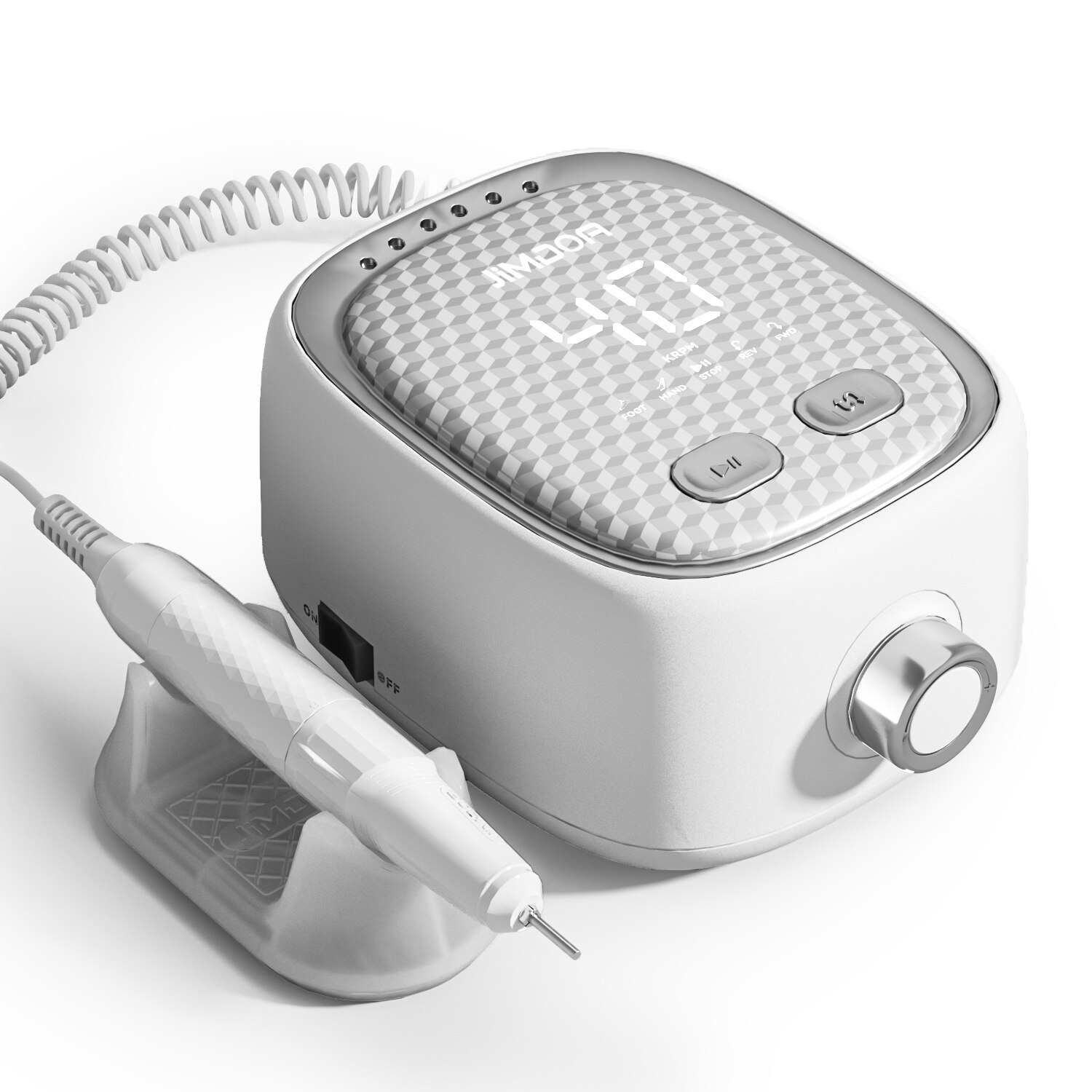
JMD-417 professional electric nail drill.
At a busy salon, this difference shows up in small repeated moments: opening a station in the morning, helping a technician move to another desk, carrying out normal care, or changing the equipment plan for a new service area. An integrated machine keeps those moments centered on one system. A separate setup gives the team more decisions in those moments, but also more freedom to adjust them.
Neither experience is automatically more professional. A calm, repeatable workflow can be the better experience for one salon; a flexible, adjustable workflow can be the better experience for another. The useful comparison is whether the equipment supports the way your own team works every day.
What the Format Alone Cannot Tell You
Do not use the words “integrated” or “separate” as a shortcut for suction, noise, dust capture, size, or overall quality. Those are model-specific questions. An integrated machine is not automatically quieter or more compact, and separate equipment is not automatically more powerful or harder to manage.
If one of those points matters to your salon, compare the exact models and the conditions behind any stated figure. Then assess it alongside the technician’s workflow, the available space, and the daily-care routine.
What Should You Confirm Before Choosing?
Use the comparison table to choose a direction, then check the actual equipment before making a final decision.
- Picture a complete service: Mark where the technician sits, where the client’s hand rests, how the tools are reached, and where each item will stay during the appointment.
- Check the real layout: Compare the supplied dimensions and placement information with the usable desk space. Integrated does not automatically mean smaller, and separate does not automatically mean harder to fit.
- Look at normal care: Read the model instructions for access to the collection area, routine care, and any stated consumables. A tidy product photo is not enough if normal care disrupts a busy service day.
- Tie key figures to the model: If suction, noise, runtime, or another figure influences your choice, ask which model and test conditions it refers to.
Jimdoa currently presents professional electric nail drills and nail dust collectors as separate product categories. If the separate route fits your salon, compare the candidate drill and collector together rather than judging either one in isolation.
Which One Should You Choose?
Choose an integrated nail drill with vacuum when you want one complete machine for a stable, repeatable station. It is the more natural format when consistency, a unified appearance, and one settled workflow matter most.
Choose a separate nail drill and dust collector when you want more freedom to arrange the workstation, select the two functions independently, or adapt the equipment plan across different desks and technicians.
Before deciding, picture a full service day—not just a product photo. The choice that feels natural at the real desk and still works as the salon changes is usually the better one.
If you are choosing equipment for a salon, share your preferred setup, rough workstation dimensions, and candidate models through the contact page. You can then clarify the configuration and model details that matter before making a final selection.