
Professional Nail Drill Machine Supplier Checklist: 12 Things Private-Label Brands Should Verify Before Ordering
Choose a professional electric nail drill with confidence. Check brushless torque, QC, certifications, MOQ and OEM/ODM support—then order smarter.
A professional nail drill machine can become a strong hero product for a beauty brand—or a costly source of returns and complaints. The difference is rarely the highest advertised RPM. More often, problems come from unstable torque, handpiece vibration, unclear certification documents, inconsistent production quality, or private-label terms that were never confirmed in writing.
For private-label brands, choosing a supplier is not simply about finding a low price. It is about verifying whether the supplier can deliver the same performance, appearance and compliance standard across every production batch.
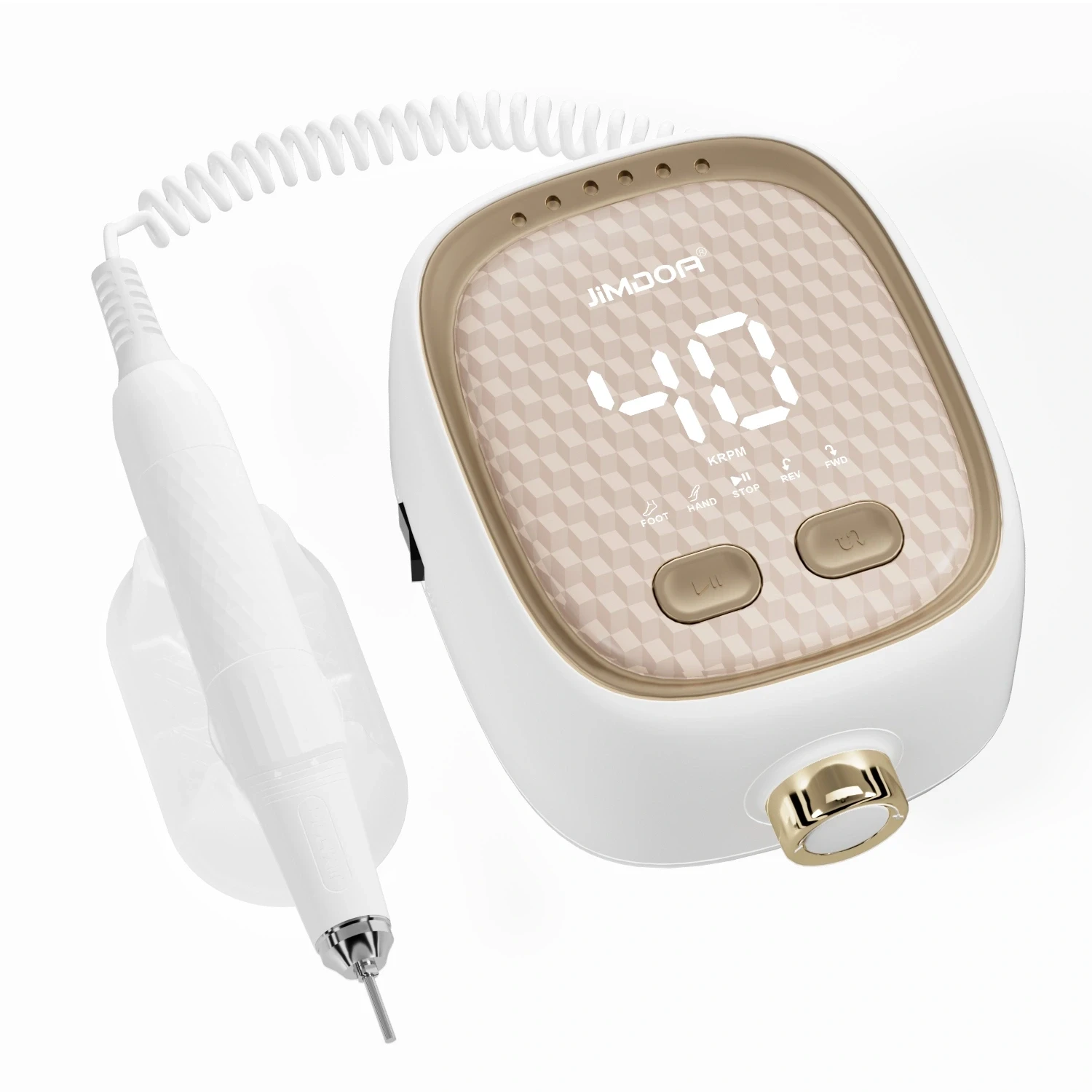
Professional Nail Drill Collection
Why Supplier Verification Matters
The U.S. nail service market includes a large number of professional users. The U.S. Bureau of Labor Statistics reported approximately 210,100 manicurist and pedicurist jobs in 2024, with employment projected to grow 7% from 2024 to 2034. The U.S. Census Bureau also recorded 34,417 employer establishments under the nail salon industry classification in 2023. These businesses depend on equipment that can withstand repeated daily use, not just attractive product photography.
That is why a professional electric nail drill should be assessed by performance under real working conditions—not by its maximum speed alone.
The JMD-417 is a useful model for establishing a practical evaluation baseline. Its published specification lists 110W and a 40,000 RPM rated speed, with up to 43,000 RPM. Treat these figures as a starting point and verify loaded RPM, heat, vibration and chuck stability on a sample before committing to a private-label production run.
The 12-Point Professional Nail Drill Supplier Checklist
1. Is the supplier a real manufacturer?
Ask for factory information, production-line photos, testing equipment, business registration details and product traceability. A trading company may still be useful, but you should know who controls the motor, housing, electronics and final inspection.
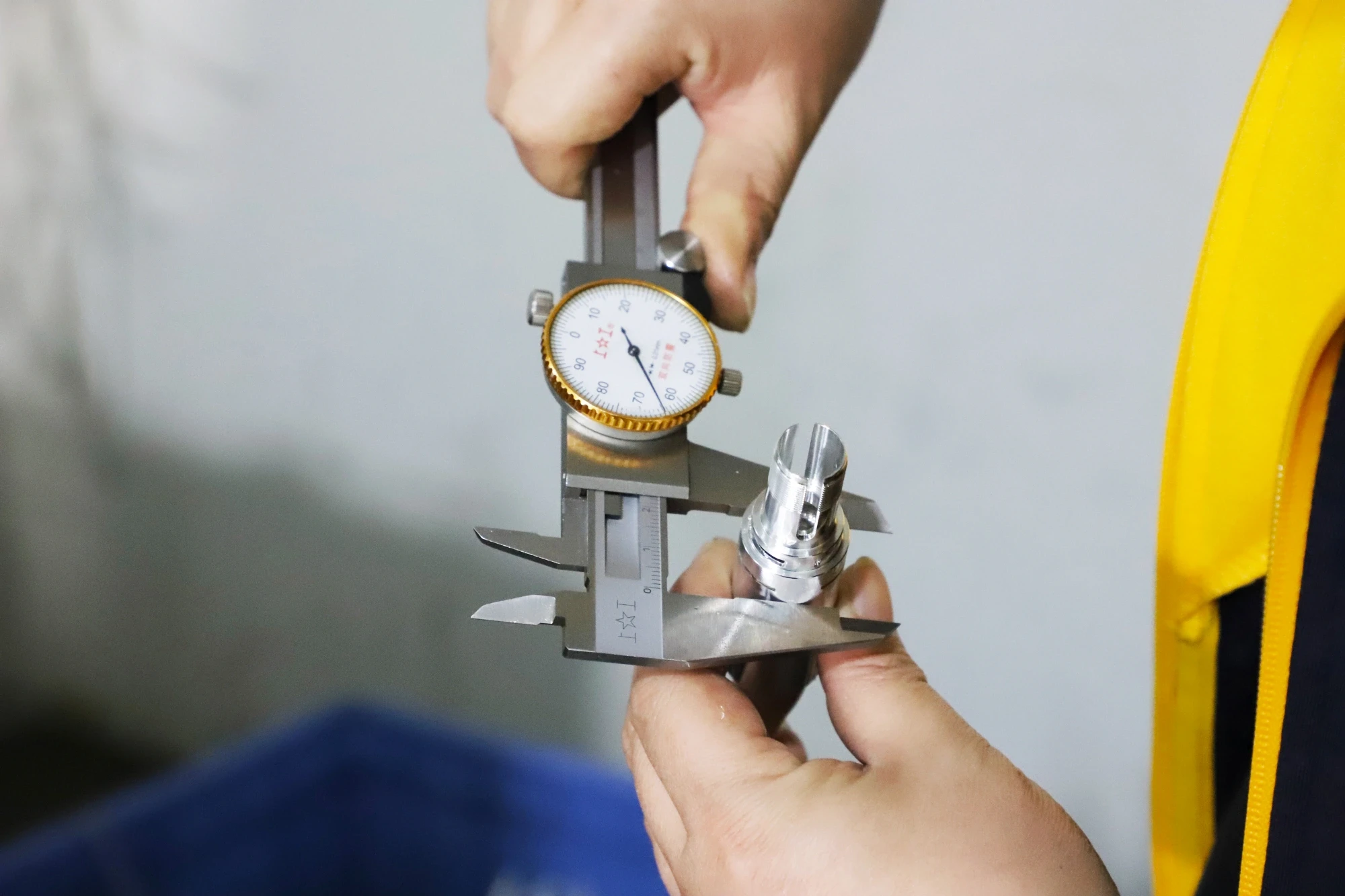
Factory Quality Inspection and Precision Testing
2. Is the RPM specification tested under load?
“Up to 35,000 RPM” may describe no-load speed. Ask for the test conditions and the actual speed when removing gel or acrylic. A reliable supplier should be able to explain speed stability, torque performance and overload protection.
3. Can the supplier verify chuck precision?
A loose or poorly machined chuck creates wobble, uneven filing and faster bit wear. Ask how runout or concentricity is measured, where it is measured and which instruments are used. Precision should be supported by a measurement record, not just the word “professional.”
4. Does the handpiece remain comfortable during long sessions?
Check vibration, noise, heat and hand fatigue. For salon use, a stable handpiece can be more valuable than an extra 5,000 RPM. Ask for continuous-use testing rather than a short demonstration video.
5. Is the motor suitable for the intended application?
Different buyers need different performance levels. A mobile technician may prioritize portability, while a busy salon may need sustained torque and a replaceable handpiece. Brushless motors are a strong option for high-volume use, but the motor type alone does not prove durability.
6. Are the product specifications complete?
Request the full specification sheet, including rated power, speed range, handpiece interface, bit compatibility, noise level, battery capacity, charging time, operating time and duty cycle.
7. Are compliance documents specific to the model?
Do not accept a generic certificate covering an entire product range. Ask for model-specific test reports, labels, manuals and declarations of conformity. For EU sales, CE compliance is linked to applicable EU requirements and supporting technical documentation. RoHS addresses restricted hazardous substances in electrical and electronic equipment.
8. Are battery and transport documents available?
For cordless professional nail drills, verify the battery model, charger output, protection system and transport documentation. Lithium battery manufacturers and distributors must make UN 38.3 test summaries available for applicable batteries offered for transport, according to the U.S. Pipeline and Hazardous Materials Safety Administration.
9. Are regional versions correctly configured?
The United States, Canada, France and Australia do not share identical market requirements. Canadian buyers should verify recognized certification marks such as CSA, cUL or cETL for applicable plug-in products. Australian suppliers may need to address RCM and EESS requirements. Confirm voltage, plug type, labeling and user instructions before production.
10. What does “private label” actually include?
Clarify whether the program covers logo printing, housing color, display branding, retail packaging, barcodes, manuals, inserts and master cartons. MOQ may be different for each item. A supplier may accept a small logo order but require a much larger quantity for custom packaging.
11. Can the supplier support a pilot order?
The safest sequence is sample testing, pilot production and then a larger order. Confirm that the sample uses the same components and firmware planned for mass production. Approve a pre-production sample before printing a large quantity of packaging.
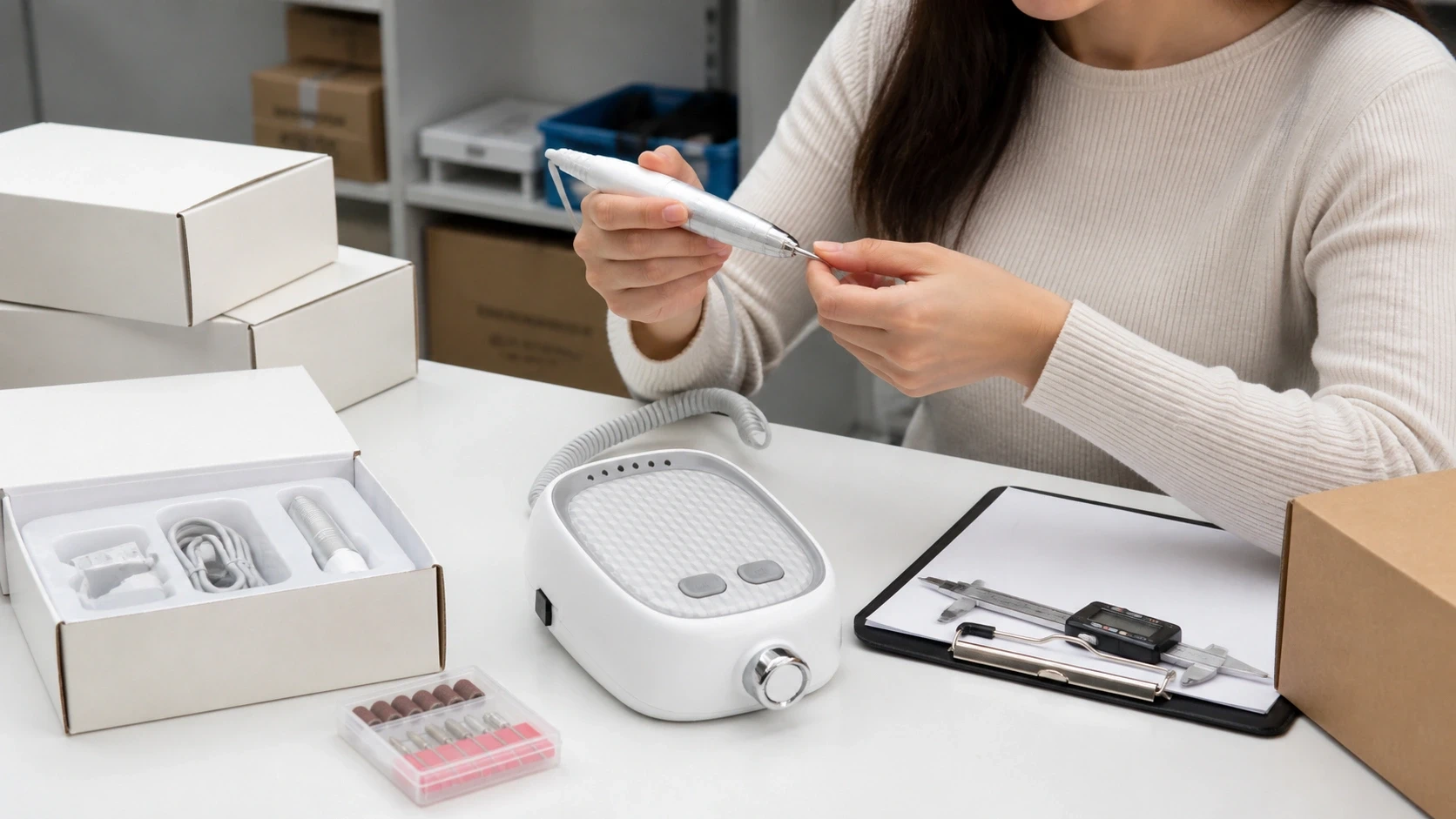
Private-Label Sample Inspection and OEM/ODM Review
12. What happens if something fails?
A written warranty should explain response time, replacement rules, spare parts, repair guidance, shipping responsibility and RMA procedures. A one-year warranty is useful only when the process behind it is clear.
Want to verify whether the JMD-417 can pass these 12 checks? Request a JMD-417 sample and loaded-performance test data before placing a bulk order.
Supplier Claims vs. Evidence
| Supplier claim | What buyers should request |
|---|---|
| Up to 35,000 RPM | Loaded RPM and speed-stability data |
| High torque | Load test, torque data or material test |
| Low vibration | Runout measurement and continuous-use video |
| Quiet operation | Noise test with distance and operating mode |
| CE, FCC and RoHS | Model-specific reports, labels and declarations |
| OEM/ODM available | MOQ, sample, packaging and artwork conditions |
| One-year warranty | Written warranty, RMA and spare-parts policy |
Match the Supplier to Your Business Model
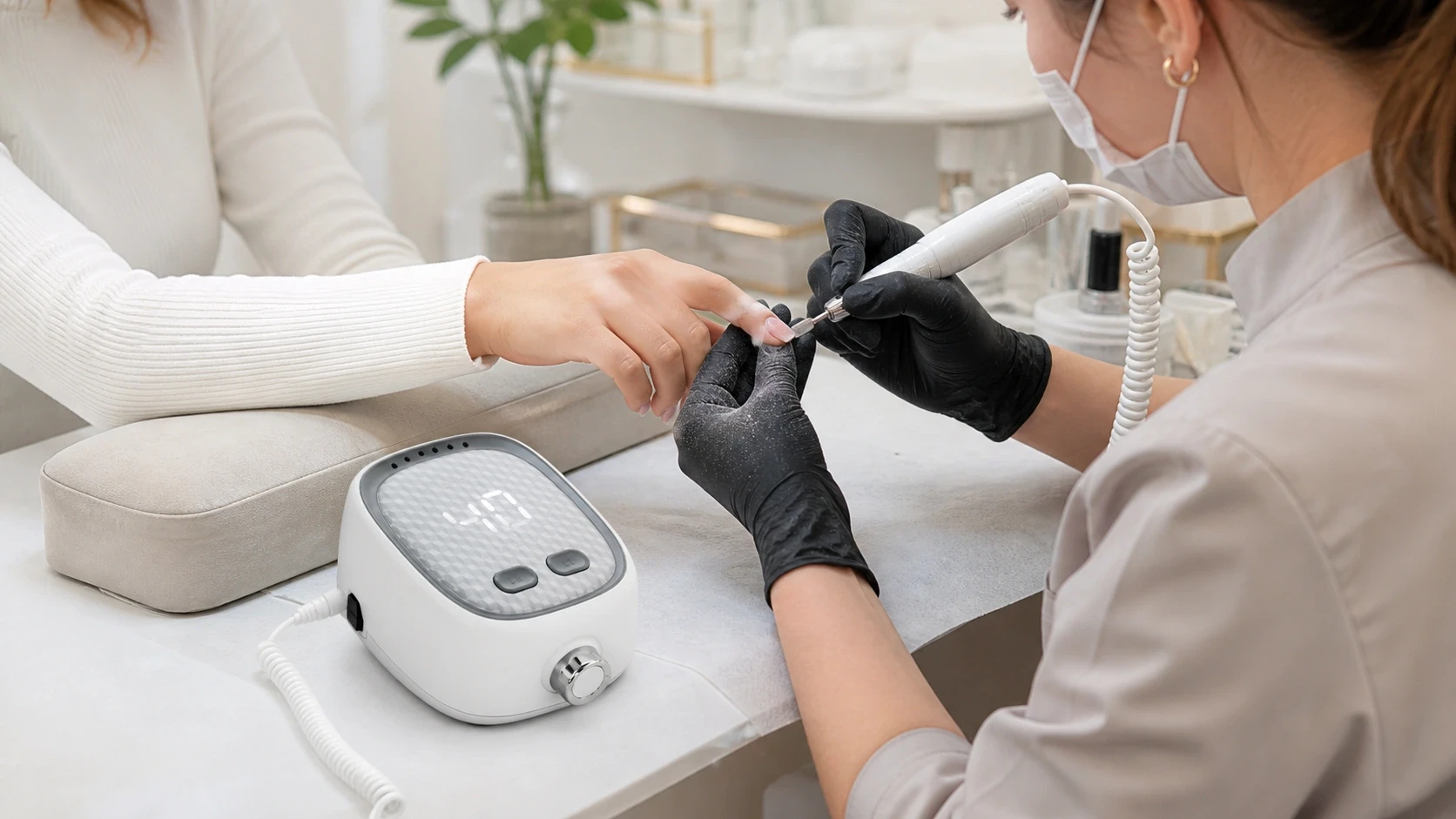
JMD-417 Professional Nail Drill for Salon Applications
For a new online or private-label brand, start with a small number of proven models. Prioritize low-risk sampling, clean packaging, product photography, clear instructions and flexible logo customization.
For nail salon equipment wholesale, focus on product consistency, regional plug options, tiered pricing, mixed-SKU orders and replacement parts. A distributor needs a stable product line, not just one attractive sample.
For salon chains and training schools, prioritize low vibration, long operating life, easy maintenance and consistent performance across multiple units. Cordless models are convenient, but corded models may be preferable for continuous daily operation.
Common Mistakes to Avoid
The most common mistake is choosing the supplier with the lowest unit price before calculating the full landed cost. Packaging, molds, testing, freight, duties, replacement parts and after-sales handling can change the real margin.
Another mistake is approving a sample without documenting its exact specifications. Record the motor, battery, charger, housing color, logo position, packaging materials and accessories in the purchase agreement.
A simple sample test can reveal more than a long sales presentation. Use the same bit and the same test material to check startup, speed drop, heat, noise, vibration, chuck stability and continuous operation.
Frequently Asked Questions
Is a higher RPM always better?
No. Torque under load, stability, temperature, vibration and bit compatibility are usually more important than maximum RPM.
What documents should I request before ordering?
Request the model specification sheet, test reports, conformity documents, battery information, user manual, QC records and written warranty.
What MOQ is reasonable for a first order?
Ask for separate MOQs for samples, logo printing, color changes, display branding and custom packaging. These requirements are often different.
Is a brushless nail drill always the best choice?
It is a strong option for professional and high-volume applications, but the supplier should still prove actual torque, temperature control, durability and service support.
Request a Professional Nail Drill Sample
Jimdoa combines in-house product development, precision chuck manufacturing, brushless motor technology, OEM/ODM customization and pre-shipment inspection support for global buyers.
As a practical starting point, we recommend evaluating the JMD-417. Its published 110W specification, 40,000 RPM rated speed, 2.35 mm bit interface and CE/RoHS/FCC support give private-label buyers a concrete baseline to test—not a substitute for loaded-performance verification.
Send us your target market, order quantity, plug type, preferred application and branding requirements. Our team can prepare a JMD-417 sample, loaded-performance test data and a private-label quotation with product and compliance details.
Explore the JMD-417 professional nail drill or contact Jimdoa for OEM/ODM support.