
What Is a Nail Drill? How It Works and Its Main Uses
Learn how nail drills work and support preparation, shaping, product removal, smoothing, and finishing.
A nail drill is an electric filing tool used for nail preparation, shaping, product removal, smoothing, and finishing. Instead of moving a manual file back and forth, the user guides a handpiece fitted with a rotating bit. The machine provides the motion, while the bit determines where and how that motion is applied.
This combination makes one nail drill useful at several stages of a professional nail service. Understanding the role of the machine, handpiece, and bit also makes it easier to compare different equipment formats.
What Is a Nail Drill?
A nail drill—also called an e-file or electric nail file—is a powered filing system. A typical setup includes a motor, controls, a handpiece, and a removable bit. Some models place the controls in a separate desktop unit, while portable and pen-style models combine the components in a more compact format.
Powered rotation is what separates a nail drill from a manual file. A manual file moves with the user's hand; a nail drill continuously turns the installed bit while the user guides the handpiece. A manual file remains useful for broad shaping and final hand-finishing, while the smaller rotating attachment can work on product layers, contours, and areas that require more localized access.
Jimdoa's professional electric nail drills include desktop, portable, and pen-style options, together with different motor types and power arrangements. The available formats reflect the different ways nail professionals, salons, mobile technicians, and product buyers use the equipment.
How Does a Nail Drill Work?
A nail drill converts electrical power into rotational motion. The motor generates that motion, the handpiece transfers it, and the bit performs the filing work. The user manages the machine through its controls and guides the handpiece over the working area.
The bit gives the rotating system a specific function. A broader working surface can cover a larger area of enhancement product, while a narrower shape can reach a contour or localized detail. The bit material and surface also affect the kind of product or finishing stage it is designed to address. Changing the bit can therefore move the same machine from product reduction to refining or finishing work.
Machine format changes how the motor, controls, handpiece, and power source are arranged. A desktop nail drill normally has a separate control unit and handpiece, keeping the controls at a fixed workstation. A cordless model uses a rechargeable power source and is easier to move between stations or appointments. A pen-style design places more of the system into a compact body. For a closer look at the two most common formats, see desktop nail drill vs cordless nail drill.
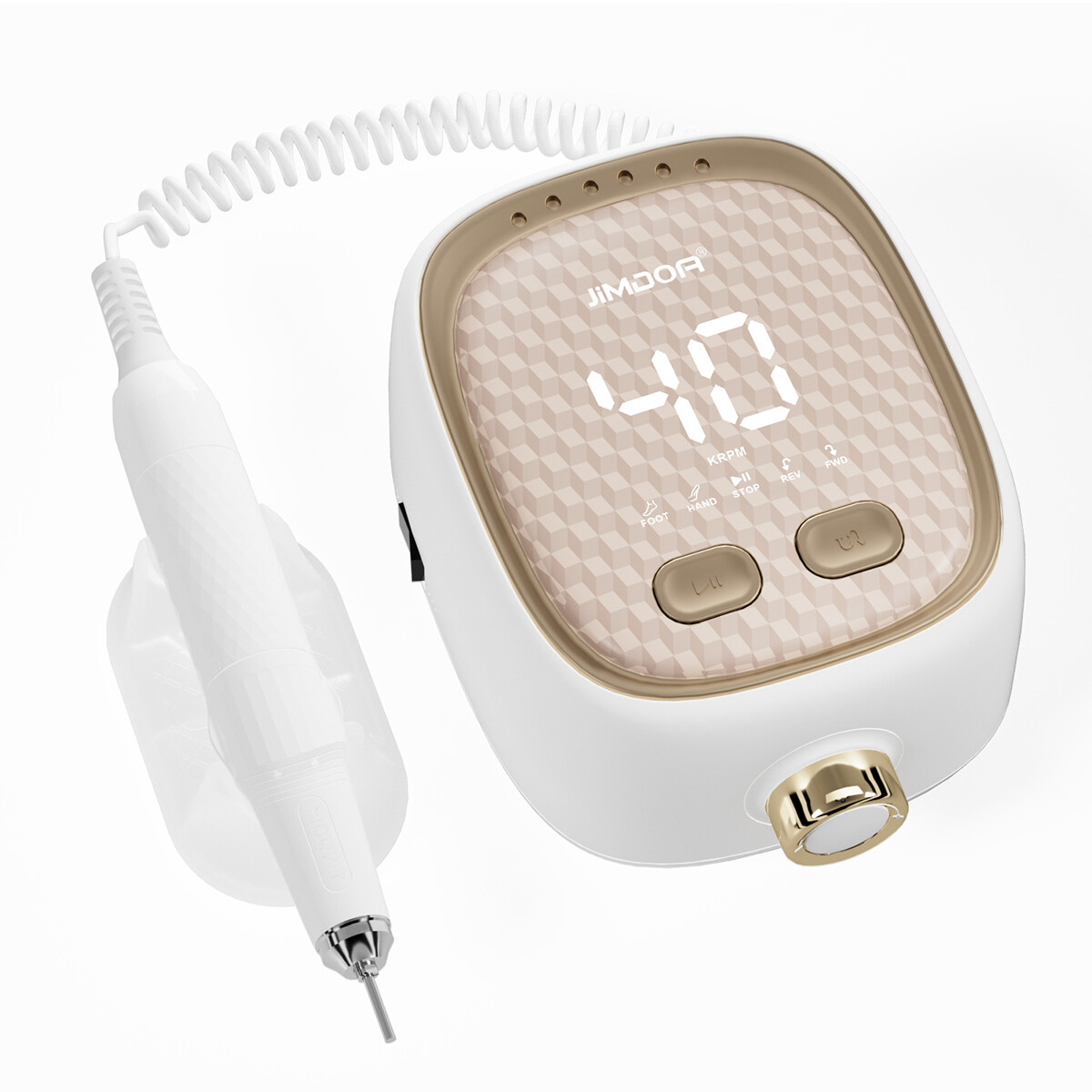
JMD-417 professional brushless nail drill with control unit and handpiece
What Are the Main Uses of a Nail Drill?
The main uses are easier to understand when they are grouped by purpose: preparing the working area, shaping or refining an enhancement, reducing old product, and completing smoothing or finishing work.
| Task | What is being worked on | Purpose in the service |
|---|---|---|
| Nail preparation | The surface and localized areas that need preparation before product application | Create a suitable working area for the next product or service step |
| Shaping and refining | The outline, surface contour, side areas, free edge, or underside of an enhancement | Develop the intended form and correct uneven areas |
| Gel or acrylic reduction | Existing artificial nail product | Remove bulk during maintenance, reshaping, or a removal service |
| Smoothing | Ridges, uneven surfaces, and visible transitions | Blend the worked area and reduce irregularities |
| Finishing | Edges, contours, and smaller details after the main filing work | Refine the final appearance before the next service step |
Nail preparation
Preparation takes place before a new product layer or enhancement is applied. Depending on the service, the drill may be used to work on a localized area of existing product, tidy the transition around regrowth, or prepare the surface for the next stage. This is different from removing a large amount of gel or acrylic: the goal is to establish the working surface, not to take down the entire enhancement.
For a salon, preparation work makes attachment range and handpiece control important. The equipment needs to support both broader surface work and the smaller areas encountered around an existing enhancement.
Shaping and refining
Shaping establishes the overall form of an artificial nail, while refining corrects smaller details within that form. A nail drill can work across the top surface, adjust a contour, clean up side areas, refine the free edge, or reach the underside of an extension. These are places where the smaller contact area of a rotating bit can complement a hand file.
The distinction matters when comparing equipment. A service menu focused on extensions and structured enhancements may require a broader selection of compatible attachments than one focused mainly on simple finishing work.
Gel and acrylic product reduction
During maintenance, a nail drill can reduce old gel or acrylic so the remaining structure can be reshaped and new product can be applied. During a removal service, it can take down a larger portion of the artificial product. These are related tasks, but they do not always have the same endpoint.
Product hardness, thickness, and the amount being removed affect the attachment and workload. This is why “gel and acrylic removal” on a product page should be understood as a service category rather than one identical task for every nail or product system.
Smoothing and finishing
Smoothing addresses irregularities left after shaping or product reduction. It can help blend a visible transition, even out a contour, or prepare the worked area for a more refined surface.
Finishing comes later and focuses on smaller details such as edges and final contours. The movement from reduction to smoothing and finishing usually involves progressively more detailed work, which explains why professional setups use several compatible bits rather than one attachment for the entire service.
What Parts and Product Terms Should You Recognize?
Knowing what the main terms refer to makes product descriptions easier to compare:
- Control unit or machine body: contains the main controls. On a desktop model, it remains on the workstation and connects to a separate handpiece.
- Handpiece: the part held and guided during the service. Its shape, weight, and connection to the control unit affect how the complete system is handled.
- Bit: the removable attachment that contacts the working surface. Its size, shape, material, and surface determine the task for which it is intended.
- Motor: generates the rotational motion. Product pages may describe the motor as carbon-brush, coreless, or brushless to identify its construction.
- Speed control: changes how quickly the installed bit rotates. Adjustable control allows one system to cover both broader product work and more detailed service stages.
- Direction control: changes the direction of rotation on models that provide this function, allowing the machine to suit different working directions and user preferences.
- Power arrangement: indicates whether the model relies on a direct power connection or a rechargeable battery, which affects workstation placement and mobility.
The JMD-417 brings several of these elements together in one desktop model: a separate control unit and handpiece, a brushless motor, adjustable speed, and a standard handpiece interface. The JMD-417 professional brushless nail drill is therefore a useful reference for buyers comparing a fixed-workstation configuration and checking which bits and accessories will accompany it.
What Should You Consider When Comparing Nail Drills?
The most useful comparison starts with the working situation rather than a single specification.
| Working situation | Questions that matter | Why they matter |
|---|---|---|
| Fixed salon workstation | Is there space for a separate control unit? Is direct power available where the service is performed? | A desktop format can remain set up at one dedicated station |
| Mobile or multi-station service | How often will the drill move? How will charging fit the appointment schedule? | Portability and battery planning become part of the daily workflow |
| Training classroom | Will every station use the same controls, handpiece, and accessories? | A consistent setup makes equipment easier to organize across multiple learners |
| Mixed service menu | Which materials and stages must the drill support? Which compatible bits are available? | Preparation, reduction, shaping, and finishing place different demands on the attachment range |
| Wholesale or private-label range | Are the sample, specification sheet, accessories, packaging, and order configuration clearly matched? | Buyers need one defined configuration that can be evaluated and repeated |
For an individual nail professional, workspace, service mix, and handpiece handling may lead the decision. A salon group or school may place more weight on consistency across several stations. A distributor or private-label brand also needs to define the exact product and accessory package that customers will receive.
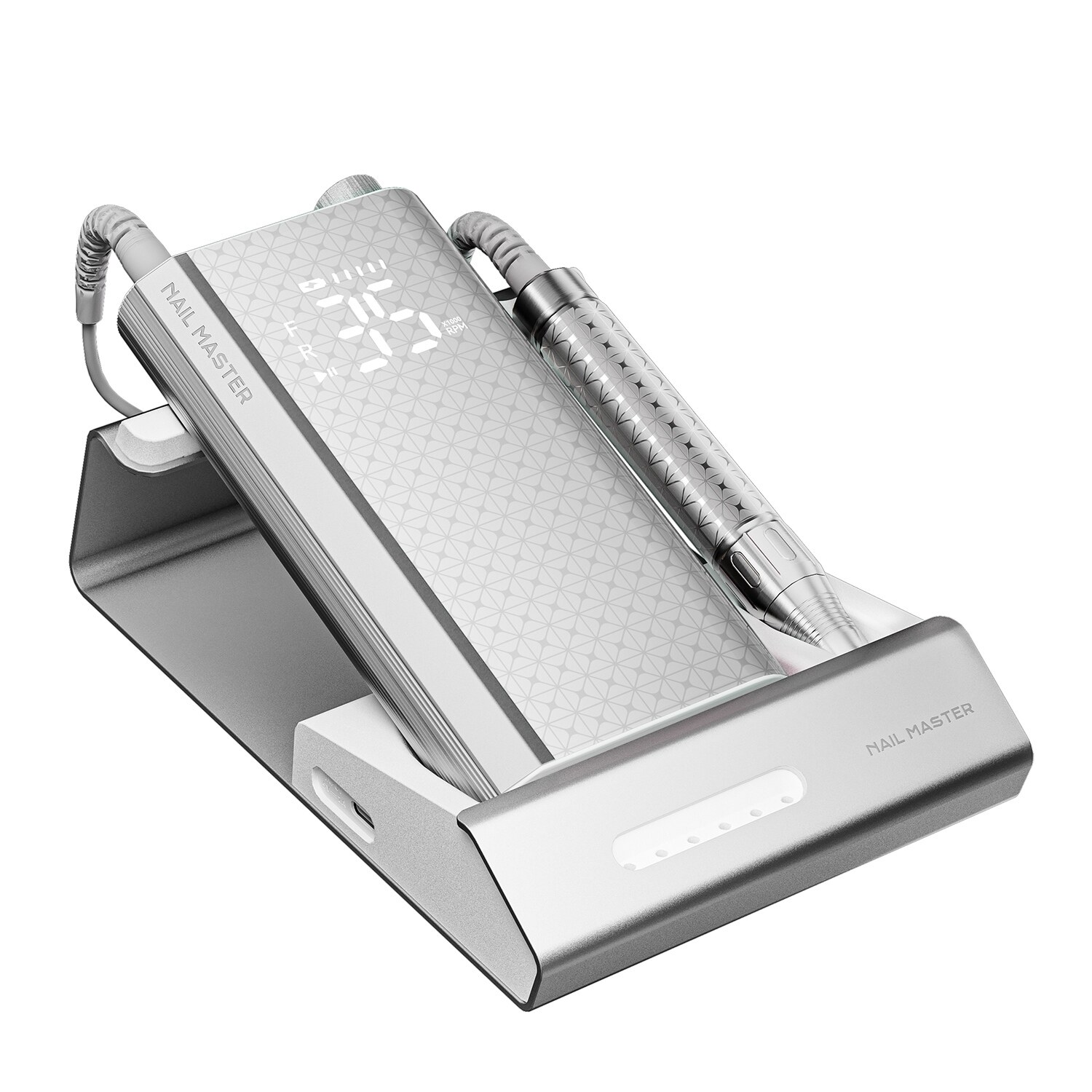
JMD-220 portable nail drill for mobile and multi-station use
Key Takeaways
A nail drill is an electric filing system made up of a motor, controls, handpiece, and removable bit. It can support preparation, shaping, gel or acrylic reduction, smoothing, and finishing because the bit can be changed to suit different areas and stages of the service.
The uses are related but not interchangeable. Preparation establishes the working area, shaping develops the form, product reduction removes bulk, smoothing evens out transitions, and finishing completes the smaller details. Recognizing these differences helps readers compare machine formats and compatible attachments in the context of real services.
For salons and product buyers interested in a desktop brushless configuration, JMD-417 offers a concrete comparison model with a separate control unit, handpiece, and adjustable-speed system.
If you are planning a salon range, training setup, wholesale assortment, or private-label nail drill, Jimdoa can provide model information, sample options, and customization support. Explore the ODM & OEM custom service or contact Jimdoa about your nail drill requirements with your service mix, preferred format, target market, and branding needs.
Frequently Asked Questions
Does a nail drill replace a manual nail file?
Not completely. A nail drill is useful for powered product reduction, localized work, and access to detailed areas. A manual file can still be practical for broad shaping, checking the final outline, and making small hand-finished adjustments. Many professional services use both.
Why does a nail drill use different bits?
Each stage presents a different working area. Removing bulk product, refining a side area, smoothing a transition, and finishing an edge do not require the same contact shape or surface. Interchangeable bits allow the machine to move between these tasks.
Is a nail drill the same as an e-file?
Yes. “Nail drill,” “e-file,” and “electric nail file” are commonly used for the same equipment category. The exact format may still be desktop, cordless, portable, or pen-style.
Which nail drill format suits a fixed salon workstation?
A desktop model is a natural format to compare when the drill will remain at one station with access to direct power. A cordless model becomes more relevant when the equipment needs to move between stations or locations.