
Why Does a Nail Drill Burn or Hurt? Common Mistakes and Warning Signs
Understand nail drill heat and pain, spot warning signs, and check your technique and equipment before continuing.
You are filing a client’s nail when they pull back and say, “That burns.” Lift the bit and pause work on that nail. Friction may be building where the bit touches the surface. A sudden sting could mean the bit caught the nail or brushed against nearby skin. What the client felt, and where, helps you decide what to check.
Why Does a Nail Drill Burn or Hurt?
Discomfort does not always have the same cause. A warm, burning feeling on the nail differs from tenderness in an already sensitive spot or a sharp sting near the edge.
Cause 1: Friction Builds Heat
Pressure, long contact, and repeated passes can build heat in a small area. Someone may feel burning where you are filing, whether the bit is touching product or the nail beneath it.
Cause 2: An Already Sensitive Nail Reacts Sooner
An area that felt tender before filing may become uncomfortable sooner. Ask whether that spot was sensitive before the service. Tenderness gives you a reason to pause, but does not show whether the nail plate has been damaged.
Cause 3: The Bit Catches the Nail or Touches the Skin
A bit that catches or scrapes a nail may cause a sudden sting on its surface. Contact with skin near the edge can hurt in much the same way, even without a feeling of heat.
Common Mistakes That Cause Heat or Pain
Once you know where discomfort occurred, look back at the bit, your hand position, and how you worked across the surface.
Pressing Too Hard
When product takes longer to remove than expected, it is easy to add pressure. That extra force can increase friction and make one spot feel hot. Ease up and check whether your bit suits the material and still works well.
Staying in One Spot or Repeatedly Filing the Same Area
Holding a bit in place keeps contact focused on one small spot. Repeated passes can do much the same thing. If an area still needs work, check your bit and approach before going over it again.
Using the Wrong Bit or Grit for the Surface
A bit used to remove artificial product may be too coarse for a natural nail. Choosing a bit or grit without considering the surface also raises the chance of scraping. Check whether you are working on product, natural nail, or close to surrounding skin, then choose accordingly.
Mismatching Speed, Pressure, and Technique
When speed is too low for the bit and task, you may find yourself pressing harder to make progress. When speed feels difficult to control, the bit may stray onto the nail or nearby skin. Aim for a setting that removes material without added pressure and still lets you guide the handpiece steadily. Suitable speed varies with the bit, material, and task.
Losing Control Near the Nail Edges
There is little room for a change in angle near a nail edge. Without steady hand support, the bit may catch the nail or touch skin. Brace your working hand and angle the bit so its working surface meets the intended area while its edge stays clear of skin.
Continuing with a Worn or Clogged Bit
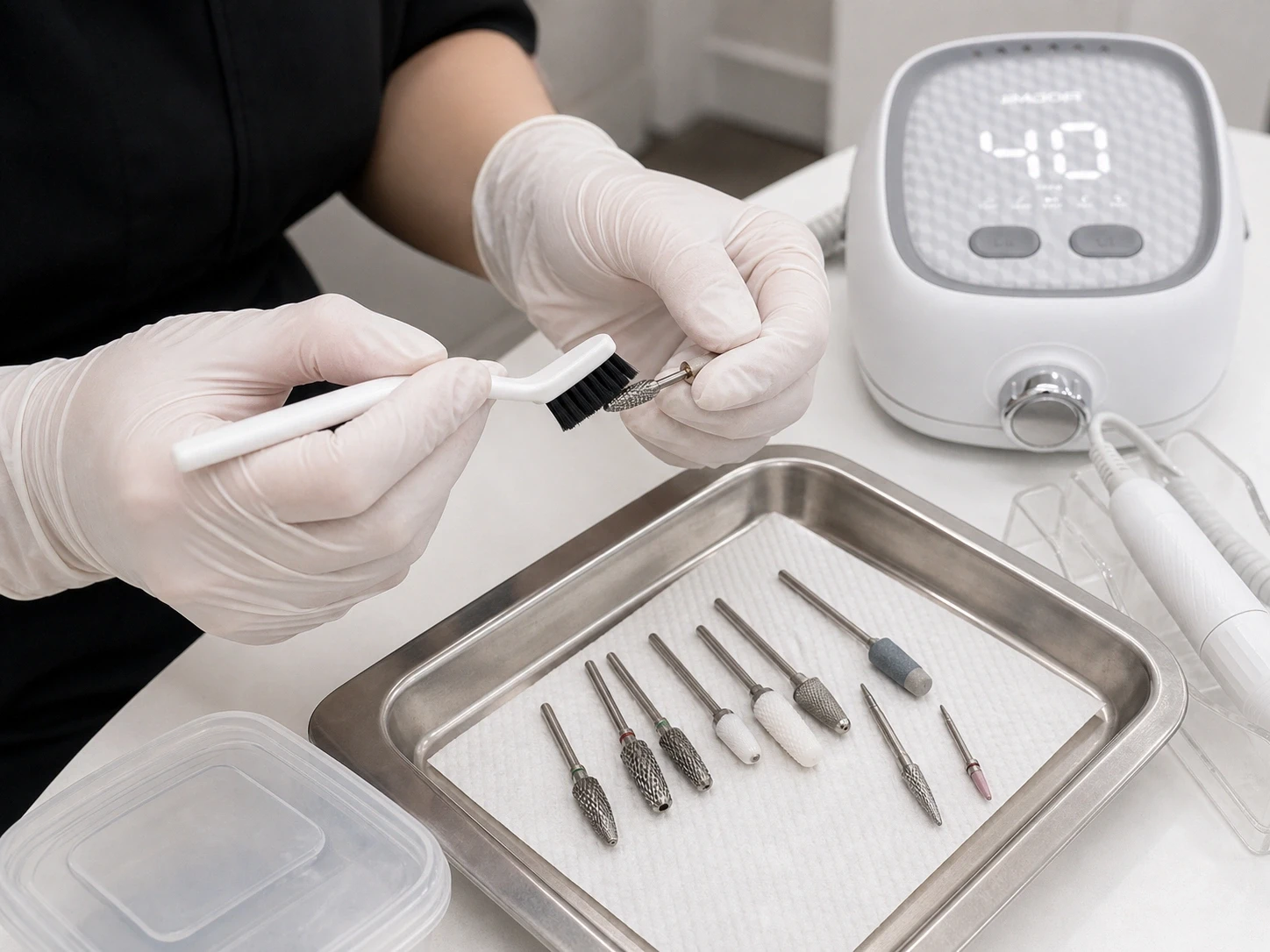
A worn or clogged bit may stop cutting effectively. More pressure or extra passes can then add heat without improving removal. Check its condition and clean or replace it as needed.
Explore Jimdoa nail drill equipment
Not sure whether your drill and bits suit the materials you file most often? Share your services and materials with Jimdoa to ask about suitable equipment, bit options, and operating guidance.
Warning Signs You Should Not Ignore
A client’s reaction may call for a pause on one nail. A change in how the drill runs may call for turning it off.
Signs on the Nail or Surrounding Skin
If someone pulls a hand away or reports burning or sharp pain, lift the bit and look at the spot indicated. Avoid filing over a visible scrape. Pain that continues after contact stops, bleeding, or a suspected nail injury calls for ending work on that area and suggesting medical evaluation. The American Academy of Dermatology recommends medical care for particularly painful nail injuries.
Signs from the Bit or Handpiece
Switch off the drill if a bit feels loose, vibrates abnormally, or catches repeatedly without warning. A handpiece that becomes noticeably hot, starts making an unusual noise, or gives off a burning smell or smoke should stay out of use until a supplier or service provider checks it.
What Should You Do When Filing Burns or Hurts?
Work through the problem in a clear order.
- Lift the bit. Pause filing on the affected nail rather than making another pass to test the sensation.
- Find the source. Ask whether the discomfort felt like heat on the nail or a sharp sting near its edge. Check separately for heat in the handpiece.
- Look closely. Check nail and surrounding skin for visible changes. Take pain seriously even when nothing looks unusual.
- Review your setup. Consider bit choice, condition, and fit along with material, pressure, hand movement, and equipment behavior.
- Decide what can continue. Leave a visibly injured or persistently painful area alone. Suggest medical evaluation when the signs above call for it.
Before another service, check nail and skin condition. Choose an intact bit suited to the task, confirm it is securely fitted, and keep pressure and movement under control. Pause when someone reports discomfort.
Conclusion
Heat may come from friction at the contact point. A bit catching the nail or touching skin may cause pain without much heat. When filing burns or hurts, lift the bit and check the area, technique, bit, and handpiece before continuing. Pain is a reason to pause, not something to push through.
Reviewing your nail drill setup? Browse Jimdoa’s professional nail drills. Share your services and materials with the team to discuss equipment and compatible bit options.
FAQs
Is a Nail Drill Supposed to Hurt?
Burning or sharp pain is a reason to pause. Lift the bit and check where discomfort occurred before doing more filing.
Why Does My Nail Drill Bit Get Hot?
Friction can warm a bit during filing. If it becomes unusually hot or causes burning where it touches the nail, check your pressure, repeated passes, and bit condition.
Why Is My Nail Drill Handpiece Getting Hot?
Heat in the handpiece is different from heat at the nail. If it becomes noticeably hot, especially alongside unusual noise, vibration, or a burning smell, turn off the drill and have it checked before using it again.